


Hemodialysis (HD)
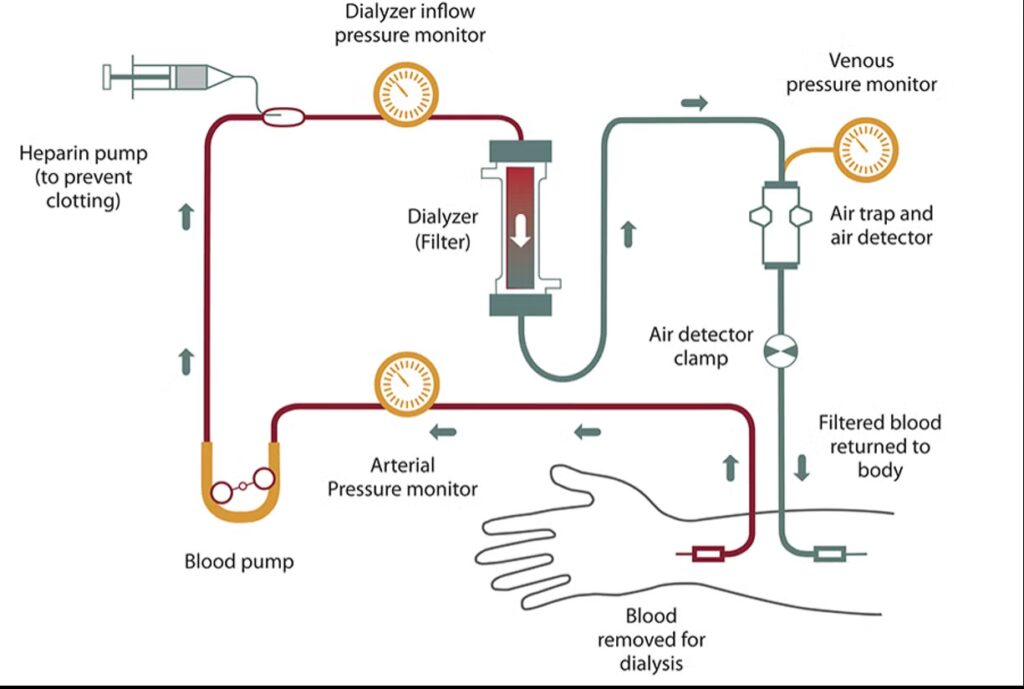
In hemodialysis, a dialyzer (filtering machine) is used to remove waste and extra fluid from your blood, and then return the filtered blood into your body. Before starting hemodialysis, a minor surgery is needed to create a vascular access site (opening into one of your blood vessels), usually in your arm. This access site is important to have an easy way to get blood from your body, through the dialyzer, and back into your body. Hemodialysis can be done at a dialysis center or at home. Treatments usually last about four hours and are done three times per week. Some people may need more time for treatments based on their specific needs.
Effectiveness
Dialysis is a very effective treatment option for clearing waste products and extra fluid from your blood. However, it does not fully replace all the kidney’s functions, so it is not considered a cure for kidney disease or kidney failure.
All types of dialysis are equally effective, but your medical condition and personal preferences may match one treatment approach better than others. You and your doctor will discuss this and decide which type of dialysis and which place is best. You may also find it helpful to talk with other people who are living with dialysis to learn from their experiences.
The following steps can help increase the effectiveness of your dialysis treatments:
- talk with your dialysis team about any concerns or side effects that you may have
- complete your treatments according to your prescribed schedule
- follow your customized eating plan recommended by your kidney dietitian
- get as much physical activity as possible to boost your strength and heart health
- talk with your dialysis provider and pharmacist about any medications, supplements, or herbal products you are taking or are considering starting
Side Effects
Both types of dialysis come with side effects. It can also be hard to tell for sure whether a symptom is because of the dialysis or the kidney failure that is also affecting the body. Some of the most common side effects that people report include:
- Blockage in your vascular access site (entrance point)
- Muscle cramps
- Hypotension (low blood pressure)
- Weakness, dizziness, or nausea
- Blood loss
- Infection of the skin, blood, and/or peritoneum (belly area) – if left untreated, these can cause sepsis (a life-threatening condition leading to multiple organ failure).
- Fatigue (feeling tired) – This can affect anyone but is usually more common for people who have been on dialysis for a long time. It is often hard to tell for sure if this is a side effect of the dialysis or a symptom of long-term kidney disease.
- Pruritus– itchy skin that people with kidney disease may experience, especially in more advanced stages of CKD and people on dialysis. Like fatigue, it is often hard to tell for sure if this is a side effect of the dialysis or a symptom of long-term kidney disease.